Keep your home insurance
Your first steps if you got a non-renewal notice, and what insurers give discounts for.
Got a non-renewal notice?
You have time. California requires the notice at least 75 days before your policy ends. It must give the specific reasons and tell you how to get help. (Insurance Code 678)
Starting in 2028, the notice goes up to 90 days. If the problem can be fixed, you first get a 120-day warning, with at least 90 days to fix it. You can also dispute wrong facts behind a wildfire score. (SB 1301)
- Read the reasons. If they're fixable, like brush, branches or the roof, ask if they'll reconsider once the work is done.
- Ask for your wildfire risk score. Your insurer has to give it to you and explain how to lower it. You can appeal it. (Department of Insurance)
- Call an independent broker now. They can check several insurers at once.
- Know the backstop. If no regular insurer will cover you, the California FAIR Plan covers fire. It costs more and covers less, so many people use it as a bridge while they do the work. (California FAIR Plan)
- Get free help. The Department of Insurance takes questions and complaints: 800-927-4357.
- Already covered? A phone video of your rooms makes a future claim for your belongings easier. Roof leak claim open now? See the dates your insurer has to meet. Home policies don't cover earthquake damage: see whether earthquake insurance is worth it.
Fixable reasons, fixed fast. A vetted local pro can clear brush, trim branches or fix vents. Free match, we aim for 2 business days.
Wildfire Prepared Home
For insurance, this matters more than the Board of Forestry's proposed Zone 0 rule.
Wildfire Prepared Home is a designation from IBHS (the Insurance Institute for Business & Home Safety). An evaluator checks the house and the first 30 feet. It is voluntary. You apply for it. (IBHS)
There are two levels. Essential (formerly Base) and Enhanced (formerly Plus). (IBHS, June 2026)
Both require a noncombustible first 5 feet: no plants, no wood or rubber mulch, no wood or vinyl fencing. (IBHS FAQ) Our sister site Zone Zero Guidelines compares what each insurer list asks for in the first 5 feet.
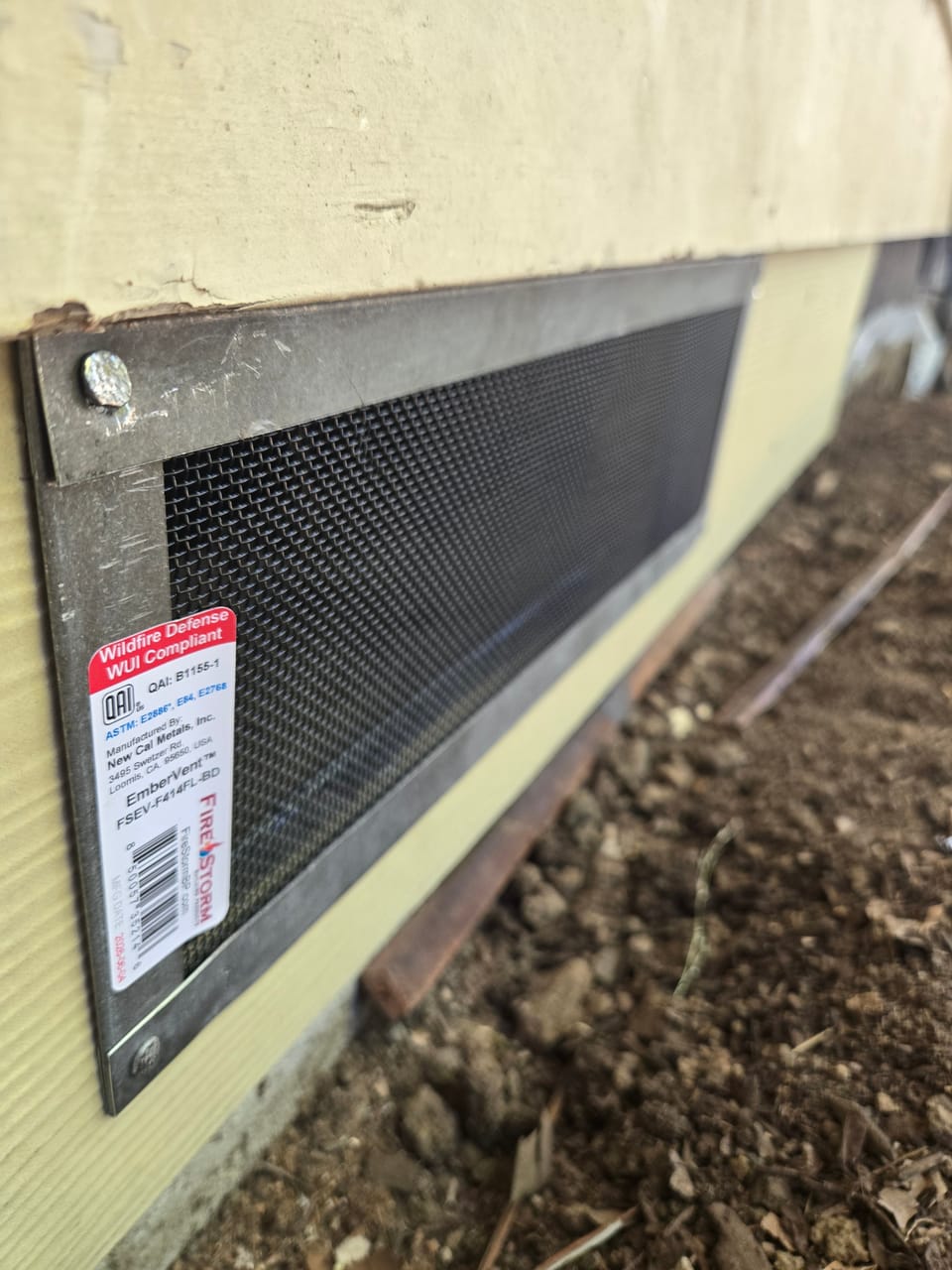
Essential also needs a Class A roof, noncombustible gutters, ember-resistant vents or 1/8 inch mesh, the bottom 6 inches of walls noncombustible, cleared under decks, and defensible space to 30 feet.
Enhanced adds enclosed eaves, noncombustible siding (no wood), windows with two tempered panes, a noncombustible deck, and outbuildings 30 feet away.
The fee is $125. It lasts 3 years.
What insurers do with it
- AAA (CSAA): won't non-renew a Wildfire Prepared home for wildfire risk for at least 3 years. (CSAA)
- State Farm: filed in September 2026 to write Enhanced homes statewide, and Essential homes in low and moderate zones. The filing is pending. It is not open yet. (Department of Insurance)
- Mercury: 22.5% to 37.5% off the wildfire part of the premium, or 30% to 50% for Enhanced. (Mercury)
- FAIR Plan: up to 16.4% off the wildfire part for safety work. No Wildfire Prepared discount. (FAIR Plan)
The designation does not guarantee coverage.
The bigger payoff is getting or keeping a policy. Each 5-foot discount item averages about 0.5% to 1% of the full premium. A full designation averages about 3.8%. (Resources for the Future, December 2025)
What insurers give discounts for
California requires every home insurer to offer discounts for listed wildfire safety work. There is no minimum amount. The state puts them at 4% to 40%. (Department of Insurance, Safer from Wildfires)
Insurer requirements often go beyond the law. See what is law and what is not.
Tap what you have done.
Clearing under decks and trimming to defensible space are already law in a State Responsibility Area (state-protected land, mostly rural) in any fire hazard zone, Moderate included, and in Very High fire hazard zones on locally protected land. (CAL FIRE, Public Resources Code 4291) Check your address.
The house items are not law for an existing home. The California Wildland-Urban Interface Code (WUI Code) covers most of them only for new or replaced work. The 6-inch wall base is one of them, in the code since January 1, 2026.
Discounts vary by insurer. Doing the work does not guarantee a discount or coverage. The Zone 0 tags are our reading. Source: California Department of Insurance.
What to ask your insurer
- "What is my wildfire risk score, and what would lower it?"
- "Which wildfire safety discounts do you offer, and what proof or inspection do you need?"
- "I finished some work. Can you give me an updated score?"
- "How do I appeal my score if I think it is wrong?"
Your insurer has to give you your score when you apply, before it renews or drops your policy, and when you ask after finishing work. It has to explain the score and how to lower it. (Department of Insurance, Safer from Wildfires FAQ) If an appeal is denied, the Department of Insurance can help: 800-927-4357.
Want the whole picture? Take the free wildfire course.
Correction, November 7, 2026: an earlier version said the 6-inch wall base is not in the WUI Code. It has been in the 2025 code since January 1, 2026, for new work.
Correction, October 18, 2026: an earlier version said a clear 5-foot zone alone averages 0.5% to 1% of the premium. In the Resources for the Future study, that is the average for each 5-foot discount item. The Essential list also left out clearing under decks.