6 steps to your certificate
Sign in

Course dashboard

Lesson 3 of 5 · About 6 minutes

The land around the house

Move water away from the house. Then see what the land around you can do in a big storm.

You'll be able to

  • Send roof water somewhere safe, on your own land
  • Spot a tree, a slope or a burn scar that could reach the house
  • Place sandbags the right way, and know what they can't do
What the tags mean

Each tag shows who says so.

  • Law nowa state or federal law in force today
  • Localyour city or county
  • Utilityyour power company
  • Our advice Our readour own view, not an agency's

Last checked . We update the course when forecasts and rules change.

12 short cards, then an 8-question quiz. Swipe, or tap Next. Tap any underlined word to see what it means. Or scroll down to read it as one page.

Grading

The ground should fall away from the house

Diagram of the string test. A stake at the house wall and a stake about 10 feet out hold a level string with a line level in the middle. A tape hangs from the string to the ground at each stake; the far one is longer because the ground falls away.
  1. Stake at the wall
  2. Line level
  3. Stake 10 feet out
  4. Measure at the wall
  5. Measure here: 6 inches or more longer
Not to scale.

Water that runs toward the wall ends up under the house.

  • Aim for at least 6 inches of fall: the ground dropping 6 inches or more over the first 10 feet out from the foundation [1].
  • No room for that? A swale (a shallow, planted dip) or a drain carries the water away [1].

Check yours with a string, two stakes and a line level, as drawn.

Don't pile soil against the siding (Lesson 2).

New terms: Fall Swale Line levelTap an underlined word to see what it means.

Downspouts

Give every downspout a safe place to empty

Three downspouts seen from aboveLooking down at a house. Left: a downspout ends at the wall and water pools against it, marked wrong. Middle: an extension carries the water at least 5 feet out onto planted ground. Right: a pipe carries it underground at least 10 feet out to a pop-up outlet in the lawn. Below, a note marked wrong: also not onto the top of a slope, a septic field or the neighbor's side. Not to scale.5 ft+10ft+Ends atthe wallOut ontoplanted groundPiped undergroundAlso not: top of a slope, septic field, neighbor's sideSeen from above. Not to scale.
  • Let it out at least 5 feet from the foundation, onto ground that slopes away [2].
  • Or pipe it underground at least 10 feet out [2].
  • Never into the perforated drain pipe that runs around some foundations. That brings the water right back to the house [2].

Good places: planted ground or a rain garden on your own land [3].

Not onto the neighbor. If your runoff damages their property, you can be liable [4].

New terms: Rain garden

Drains

Water on the ground and water in the ground need different fixes

A swale and a French drain, cut throughLeft: a swale, a shallow planted dip in the ground that collects water running across the surface. Right: a French drain, a trench lined with fabric and filled with gravel around a pipe with holes; water seeps in from the soil around it. Both need an outlet.Swalefor water on the groundFrench drainfor water in the groundA shallow, plantedchannel on the surfaceFabricGravelPipe with holesBoth need an outlet.A drain moves water. It doesn't make it disappear.
  • Water running across the ground: fix it where it starts, or give it a path on the surface, like a swale (a shallow, planted dip) [3].
  • Ground still soggy a day after the rain (our read): water is moving through the soil. A French drain, a gravel-filled trench with a pipe, is built for that [3].
  • A dry well, a buried gravel pit, lets water soak into the ground. It only works where the soil drains [3].

A drain doesn't make water disappear. It moves it. Pick the outlet before you dig.

Not sure where your water goes? Have the lot looked at.

New terms: French drain Dry well

Culverts

Keep the culvert clear, and find out whose it is

A driveway culvert, plugged and clearTwo side views of a driveway over a culvert pipe, with a ditch flowing left to right. Left: leaves plug the inlet, water backs up until it pours over the top of the driveway. Right: the inlet and outlet are clear, and the water flows under the driveway through the pipe.PluggedClearwater goes over the topwater flows underDrivewayInletOutletDrivewayClear the inlet and outlet between storms.Whose job it is: ask your county or city.

A culvert carries a ditch or creek under a driveway or road. Plugged, it floods the driveway or yard.

Before storms and between them (our advice):

  • Clear the inlet and outlet.
  • Rake leaves off the street drain grate.
  • Never reach into moving water or stand in a flowing ditch.

Local Rules differ by county, and the culvert is often yours. Unincorporated San Mateo and Marin counties put driveway culverts on the owner [8][9]. Ask your county or city public works who maintains yours.

Carries a creek? Read card 9 before you dig.

New terms: Culvert

Trees

Weak tree, soaked soil, wind

Drawing of a large oak next to a house after rain. The tree leans, the soil is heaved up around the roots on one side, a dead limb hangs from the crown, the trunk is cracked at a fork, a hollow opens in the trunk, and shelf mushrooms grow at the base.

The risk climbs when three things meet: a weak tree, soil soaked by heavy rain, and strong wind [11][12].

Our read a full green crown doesn't rule out rot inside.

After dry years, drought-weakened trees fall more easily, so look harder (Lesson 1).

Signs to look for [11]:

  1. A new lean
  2. Soil cracking or lifting around the roots
  3. Cracks in the trunk or where big limbs join
  4. Dead or hanging limbs
  5. Mushrooms or other fungus at the base
  6. Hollow or soft, rotten wood

See any? Have an ISA Certified Arborist look [11].

New terms: ISA Certified Arborist

Trees and power lines

Trees near wires: who trims what

Which wires are the utility's, and which is yoursA utility pole with lines along the street, and a single wire from the pole to the house, the service drop. A tree grows near the street lines: the utility trims those, so report the tree. Another tree grows under the service drop: PG&E says the owner keeps it clear.Lines on poles: the utility trims.Don't trim near them. Report the tree.Service drop,pole to housePG&E: the owner keeps the service drop clear of plants.Other utilities have their own rules. Ask yours.

Who trims a tree near a wire depends on which wire it is, and on your utility's rules. PG&E's are the example here [13].

  • Utility Lines on poles along the street: the utility trims around them. Don't trim near them. Report the tree [13].
  • Utility The wire from the pole to your house is the service drop. PG&E puts it on the owner, and offers a free, temporary disconnect so the work is safe [13].

A tree or limb on a wire: treat the wire as live. Stay back. Call 911, then your utility [34] (Lesson 5).

New terms: Service drop

Trees and wind

Trees before, during and after a storm

Trees before, during and after a stormThree steps. 1, before: a dead limb is pruned from the ground with a pole pruner, and the rest of the crown is left whole; a topped tree is crossed out. 2, in high winds: a person inside, in an inner hallway away from the window, while a tree bends outside; the car is parked in the open, away from the tree. 3, after: a person picks up twigs away from a limb hanging in the crown, after looking up; a bent branch held down under a fallen trunk is marked for a pro.1BeforePrune dead limbs.Don't top it.2In high windsInside, awayfrom windowsand treesPro3AfterLook up first.Hanging, bent:a pro
  1. Before

    have dead, broken or weak limbs pruned. Don't top a tree. The regrowth is weakly attached [27].

  2. In high winds

    stay inside, in a room away from windows. Don't walk, drive or park under trees [28][29].

  3. After

    look up first, then pick up small debris. Leave hanging limbs, split or leaning trees and bent branches to a pro. A cut can release stored force or kick the saw back [30][31].

Hiring a crew? Door-to-door pressure, cash up front or no proof of insurance are red flags [32].

Slopes and slides

The slope above you and the slope below

Signs a slope may be moving [14]:

Signs a slope may be movingA house on a bench, with a slope above and a slope below down to a creek. Five numbered signs: 1 new cracks in the ground, 2 water running down the slope and pooling where it never did, 3 tilting poles and fences, 4 a cracked wall and a sticking door, 5 a creek that turns muddy.12345
  1. New cracks or bulges in ground or pavement
  2. Water flowing or pooling in new places
  3. Tilting trees, poles or fences
  4. Doors that start to stick, new cracks in walls
  5. A creek suddenly muddy, rising or dropping

Some slides give no warning [14].

See signs? Leave if you think it could go. Warn neighbors. Call your fire department or public works [14].

Keep downspouts off slopes [3].

State landslide maps show known slides, not a live alert [15].

New terms: Landslide

Creeks

Creek banks: go gentle, and ask before you dig

Gentle care for a creek bankA house above a creek, cut through. The downspout points away from the top of the bank. Yard waste is kept off the bank. Plants on the bank hold it with their roots. Before work in the channel, notify the California Department of Fish and Wildlife.Downspout pointsaway from the bankNo yard waste ordirt on the bankKeep the plants.Their roots holdthe bank.Work that could changethe channel? Notify CDFW first.

Creek banks wear away faster when roofs and pavement send more water into the creek, faster [16].

  • Keep the plants that hold the bank [16].
  • Point downspouts away from the top of the bank [16].
  • Keep yard waste, soil and broken concrete off the bank [17].

Law now Notify the California Department of Fish and Wildlife (CDFW) before work that could substantially change the bed, bank or channel [17]. Some counties, like Marin, need a permit too [9].

New terms: CDFW

Burn scars

Below a burn, a short burst of rain can be enough

A debris flow from a burn scarA burned slope above a neighborhood, with a dashed line at the burn edge. A few minutes of heavy rain can start a debris flow. It runs down a channel, past the burn edge and across unburned ground, to the homes below. Risk is generally highest in the first two years after a fire.Burn edgeA few minutes of heavy raincan set one offBurn scar:highest risk thefirst 2 yearsIt can run far pastthe burn, onto groundthat didn't burnUnburned

A debris flow is a fast mix of mud, rock, trees and water. Many people call it a mudslide [19].

  • Below a burn scar, a few minutes of heavy rain can set one off [19][20].
  • Risk is generally highest the first two years after a fire [20].
  • They can run far past the burn, onto ground that didn't burn [19][20].

Below a recent burn, plan to leave early. Need extra time? Go on an evacuation warning. An evacuation order means leave now [22].

Find burns near you on the USGS debris flow hazard maps [20].

Before the storm

Sandbags steer water. They don't seal it out.

Sandbags can turn low flows away, up to about 2 feet [26]. They leak, and water can go over the top [23][24].

Told to leave? Leave. Don't stay to sandbag [23][24].

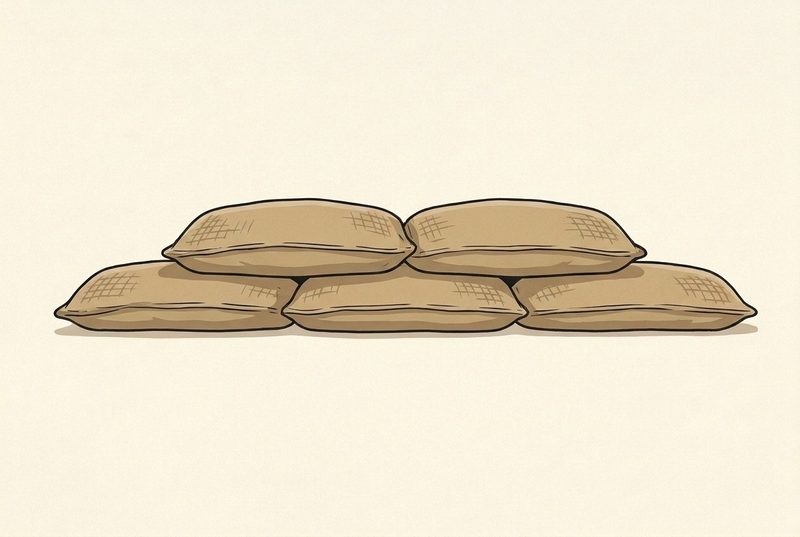
The state's flood-fight method [23]:
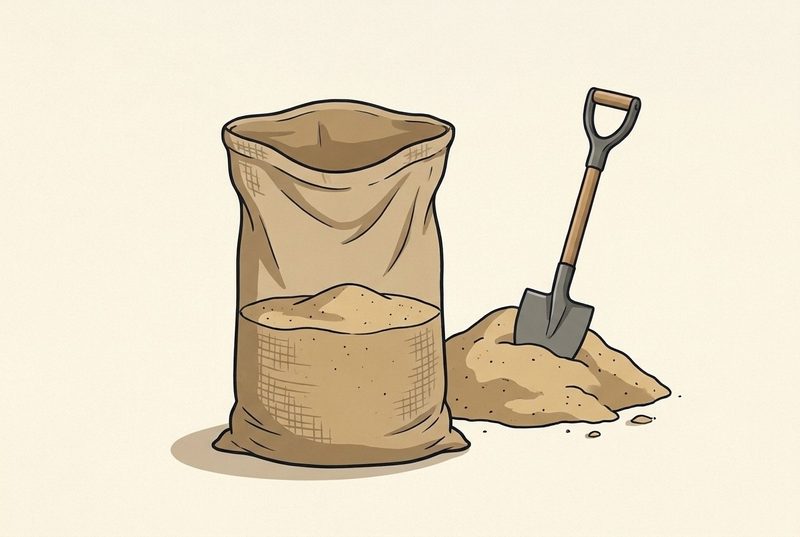
  1. An open sandbag about one-third full of sand, beside a shovel and a sand pile.

    1. Fill each bag about one-third full.
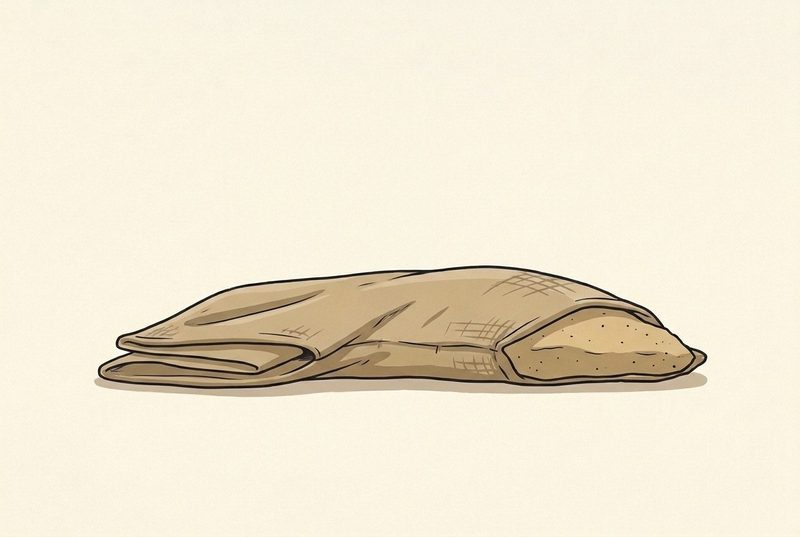
  2. A filled sandbag lying flat, its empty top folded under.

    2. Fold the empty top away from the water.
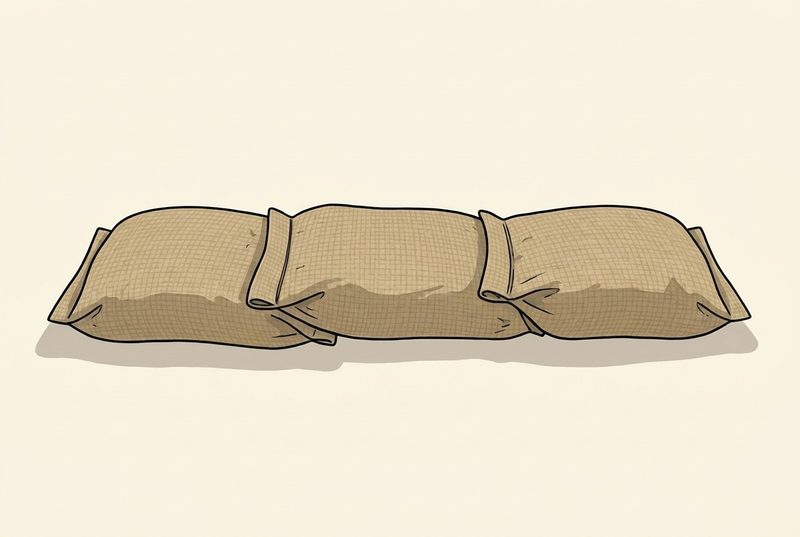
  3. Three sandbags in a row, each one lapping over the folded end of the last.

    3. Lay the next bag over the fold.

  4. Five sandbags in two rows, the top two set over the joints of the bottom three.

    4. Stagger the seams, like bricks.

Two layers at most, unless a building backs them or you build a pyramid [26].

Bags: your county's sandbag page [24].

This weekend

This weekend, step by stepEight small pictures with one word each, in the card's order. Free: a camera, photograph where rain runs and pools; a culvert, clear it; a tree, check the trees near the house; a burned slope, check the USGS map; a sandbag, save your county's sandbag page; wind, secure what it can throw. Cheap: a downspout extension, extend downspouts. Bigger: ground sloping away from a wall, plan a regrade.FreeFreeCheapBiggerPhotoClearTreesBurnBagsWindExtendRegrade

Free:

  1. 1

    Photograph where rain runs and pools.

  2. 2

    Clear the culvert while no water flows.

  3. 3

    Check trees near the house (card 5).

  4. 4

    Below a burn? See card 10's USGS map.

  5. 5

    Save your county's sandbag page.

  6. 6

    Wind coming? Secure what it can throw [33].

Cheap:

  1. 7

    Extend downspouts to 5 feet out.

Bigger:

  1. 8

    Ground falls to the house? Plan a regrade.

Glossary

Every term used in this lesson.

Fall
How much the ground drops over a distance, like 6 inches over 10 feet.
Line level
A small level that hangs on a string, used to check how much the ground drops.
Swale
A shallow, gently sloped channel in the ground, often planted, that carries surface water away.
Rain garden
A shallow planted basin where roof or yard water collects and soaks in.
French drain
A gravel trench with a perforated pipe along the bottom that carries water out of soggy soil to an outlet.
Dry well
A buried gravel pit or perforated tank that lets water from a downspout or drain soak into the soil.
Culvert
A pipe that carries a ditch or creek under a road or driveway.
ISA Certified Arborist
A tree professional certified by the International Society of Arboriculture to assess and care for trees.
Service drop
The wire that runs from the utility pole to your house.
Landslide
Soil or rock on a slope moving downhill, slowly or all at once.
CDFW
The California Department of Fish and Wildlife, the state agency that reviews work in and near creeks. If creek work could substantially harm fish or wildlife, CDFW sets written conditions in a Lake or Streambed Alteration Agreement.
Burn scar
Land burned by a recent wildfire. With the plants gone, rain runs off fast and can start a debris flow. Lesson 1 covers it.
Debris flow
A fast-moving mix of mud, rock, trees and water that pours down a slope or channel, often below a recent burn. Many people call it a mudslide. Lesson 1 covers it.

Want to go deeper?

Optional. Everything the quiz asks is in the lesson above.

On our sites

From the experts

Sources

  1. California Building Standards Commission, 2025 California Residential Code, section R401.3 (drainage), effective January 1, 2026. (code text).
  2. U.S. Department of Energy and Pacific Northwest National Laboratory, Building America Solution Center, "Gutters and Downspouts," undated.
  3. Sonoma Resource Conservation District and RCD of Santa Cruz County, "Slow It. Spread It. Sink It. Store It! A Homeowner's Guide to Beneficial Stormwater Management," 2nd edition, June 2015 (PDF).
  4. California Supreme Court, Keys v. Romley, 64 Cal. 2d 396, April 11, 1966.
  5. San Mateo County Public Works, "Public Right-of-Way Maintenance Guide," revised 2023 (unincorporated areas).
  6. Marin County Public Works, "Who is responsible for the maintenance of my driveway culvert?" undated.
  7. International Society of Arboriculture, TreesAreGood.org, "Recognizing Tree Risk," July 2021 (PDF). Copy hosted by the City of Flint.
  8. International Society of Arboriculture, TreesAreGood.org, "Storm-Related Tree Damage," July 2021 (PDF) (same source as Lesson 1, source 17).
  9. PG&E, "Vegetation management" (trees near distribution lines and service drops, free temporary disconnect), undated, accessed November 2026.
  10. USGS Landslide Hazards Program, "What are the signs of landslide development, and what do I do if a landslide occurs?" undated.
  11. California Geological Survey, "Landslides," undated.
  12. Sonoma Resource Conservation District, "Streambank Erosion: A Resource Guide for Sonoma County Residents with Streamside Erosion Concerns," 2025 (PDF).
  13. California Department of Fish and Wildlife, "Lake and Streambed Alteration Program: Questions and Answers," undated (Fish and Game Code section 1602).
  14. USGS, Fact Sheet 2022-3078, "Postfire Debris Flow Hazards: Tips to Keep You Safe," October 17, 2022.
  15. USGS Landslide Hazards Program, "Postfire Debris-Flow Hazard Maps," 2026.
  16. Cal OES, "Be Prepared: Sign Up for Emergency Alerts," 2025.
  17. California Department of Water Resources, "Flood Fighting Methods," 2024 (PDF).
  18. Cal OES, "Where You Can Find Sandbags in Your County," February 2, 2025.
  19. San Mateo County, sandbag guidance (PDF), undated.
  20. International Society of Arboriculture, TreesAreGood.org, "Pruning Mature Trees," June 2021 (PDF).
  21. National Weather Service, "During a High Wind Event," undated.
  22. Cal OES, "Staying Safe in High Winds," December 29, 2025.
  23. CDC, "Chain Saw Safety," reviewed August 26, 2026.
  24. OSHA, "Chainsaw Safety," 2023 (PDF).
  25. Contractors State License Board, "After a Disaster" guide, undated (PDF).
  26. National Weather Service, "Before a High Wind Event," undated.
  27. PG&E, "Report an electric issue," undated.

Written by Devan Hemmings. General information for learning, not an inspection or legal advice.